Strivve
User Experience Research (Concept Validation)
Client
Strivve
My Role
Lead UX Researcher
Tools
Desk Research Quantitative Survey using- (Google Forms, Zoom, Notion)
Timeline
September 2025
Description
To validate Strivve, a human-first, privacy-friendly fitness platform designed to support beginners who feel intimidated or self-conscious about going to the gym
Context
This project started from noticing a pattern: many people want to get fit but struggle with consistency, gym anxiety, or time constraints. Some feel lost or intimidated in gyms, others lack motivation without human support. At the same time, fitness-enthusiasts want to help but don’t have the time to coach in person. Exploring these gaps through research and conversations shaped the idea of a more human, accessible way to get guided fitness support.

Project Overview.
Strivve is exploring a platform that connects fitness trainers with individuals who feel overwhelmed, shy, or too busy to commit to in-person gym routines.
The concept is simple:
Remote, human-guided fitness without the pressure of the gym environment and without the demands of physical presence from trainers. The research plan was to validate the concept from two sides:
People who struggle with consistency, gym anxiety, or time constraints
Trainers who already coach clients remotely or are willing to.
This case study reflects insight from:
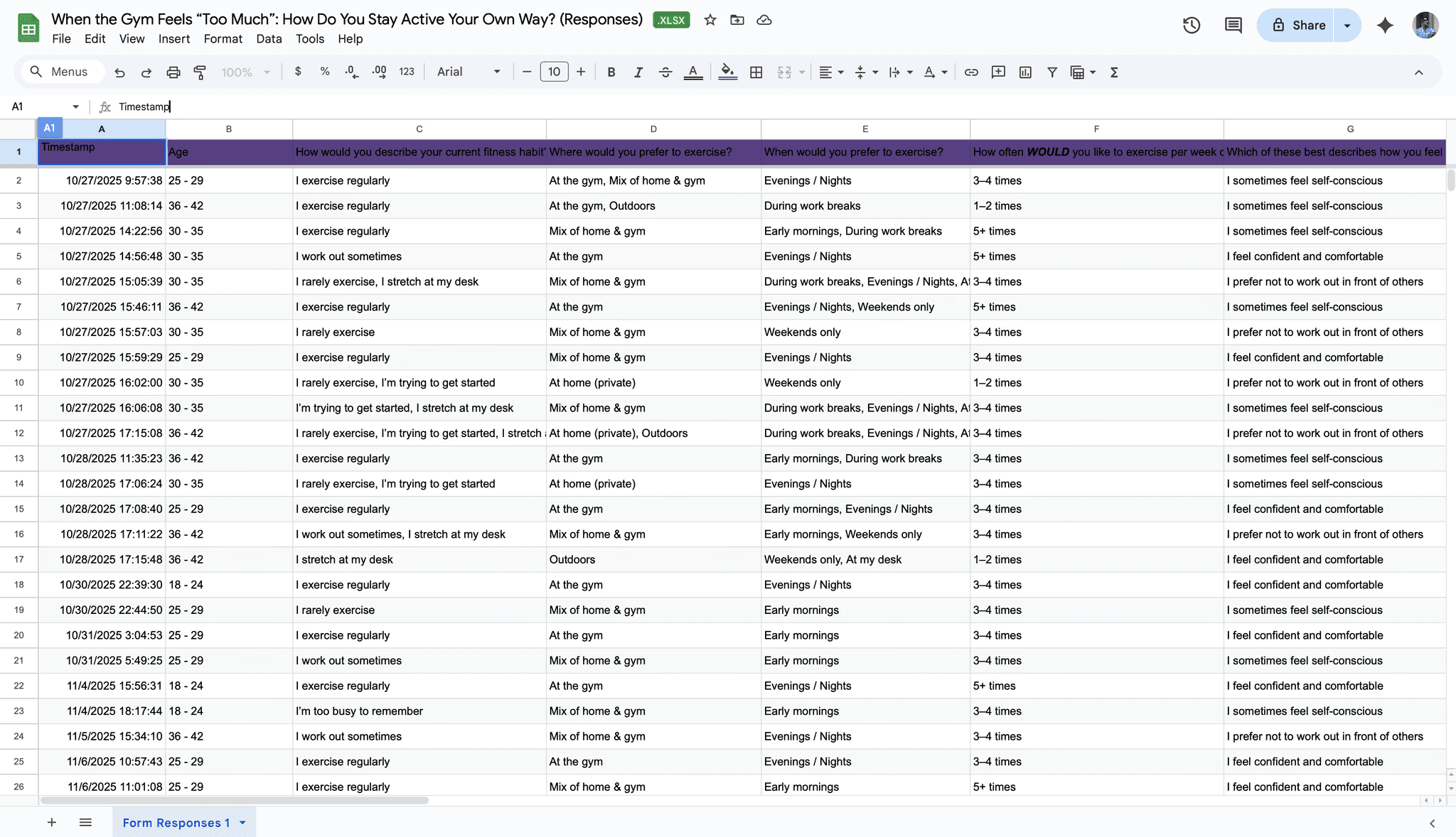
52 individuals
25 fitness trainers
Research Goals.
For Gym-Goers ⸺
Understand why they avoid gyms or struggle with consistency.
Explore emotional barriers such as shyness, intimidation, comparison, or lack of confidence.
Identify when, where, and how they prefer to work out.
Understand how they currently use fitness content (YouTube, apps, trainers).Customize the landing page design to meet the audience's needs and preferences.
For Fitness Trainers ⸺
Understand their current coaching workflow.
Identify pain points with managing clients remotely.
Check willingness to join a new platform.
Validate whether the Strivve model solves real problems.
Understanding The User.
● User Research
● Pain Points
● Personas
● Insights
● Recommendations/Next Steps
Methodology.
Methodology | Participant | Purpose |
|---|---|---|
Survey | 52 Gym Goers | Understand emotional + practical barriers, |
Survey | 25 Trainers | Understand workflow, frustrations, pricing, |
Participants were global, giving a diverse perspective on universal pain points.
key Findings.
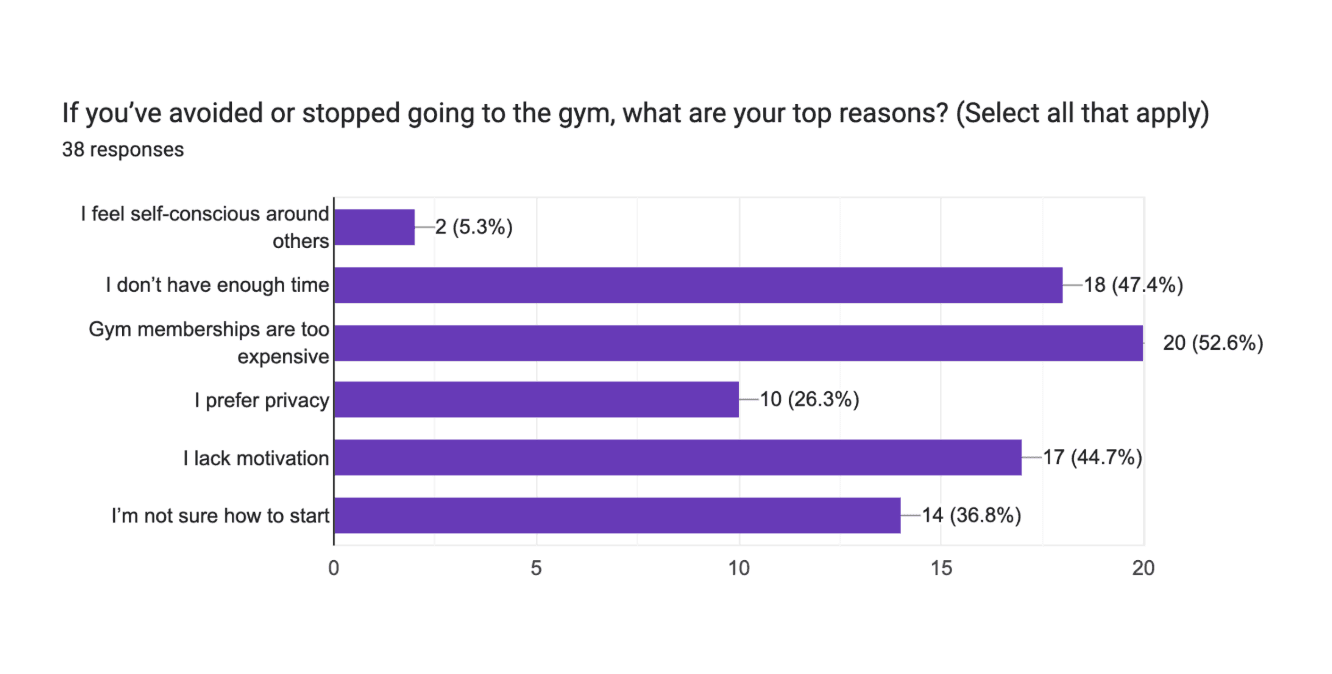
Reasons For Not Going To The Gym
52.6% Cited gym membership costs
47.4% Don’t have enough time
44.7% Lack the motivation
36.8% Are not sure how to start
Others just feel self conscious and prefer privacy.
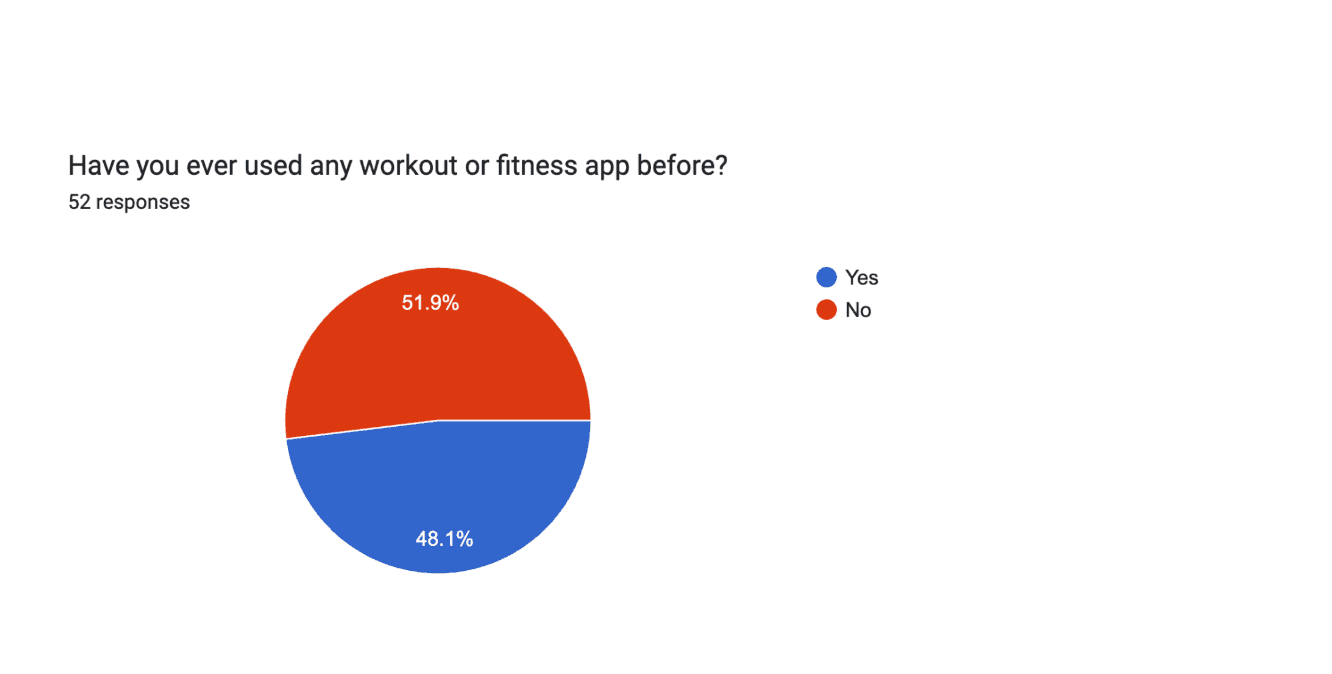
When asked if they’ve ever used a workout app
51.9% Responded No
48.1% Responded Yes
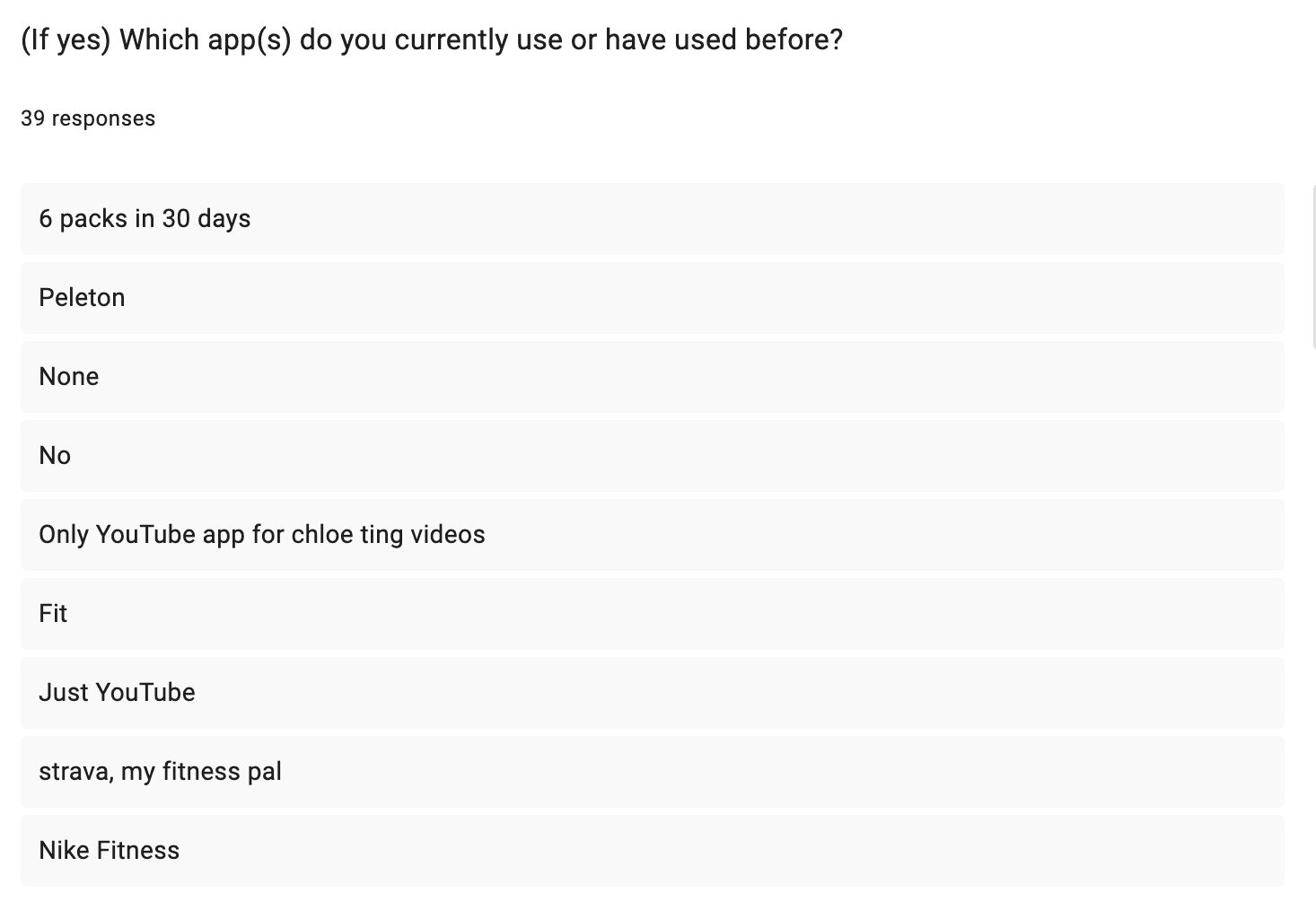
Most People already use youtube or fitness apps.
A large majority use:
YouTube workout videos
Nike Training Club
FitBit
Peleton
but many said they lack:
Alternative gymesque-equipment suggestions
Smarter progress tracking
Beginner friendly posture guides
A progress tracking timeline
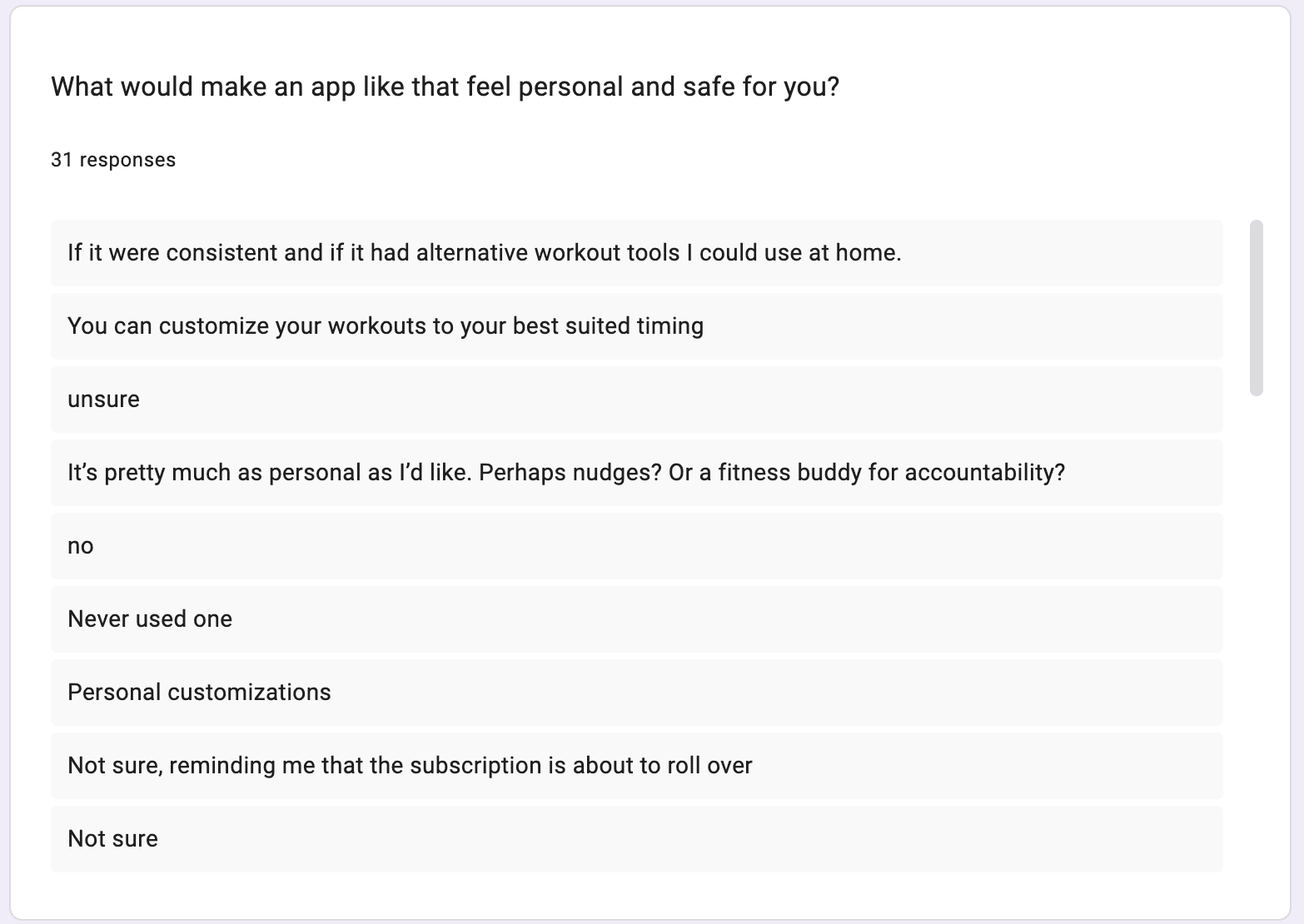
Desired accountability
Trainers Tool fragmentation:
Trainers rely on a mix of WhatsApp/DMs, Zoom, prerecorded video routines, This only creates admin overhead and inconsistent client engagement.
Feature priorities for trainers:
84% Would like a One time Upload ofworkout videos at the ready for clients selection.
84% Automated check in/workout reminder for clients.
89% Want client progress dashboards.
But many said they lack:
Personalisation
Accountability
Human connection
A flexible structure
Pain Points.
Individuals (25 responses)
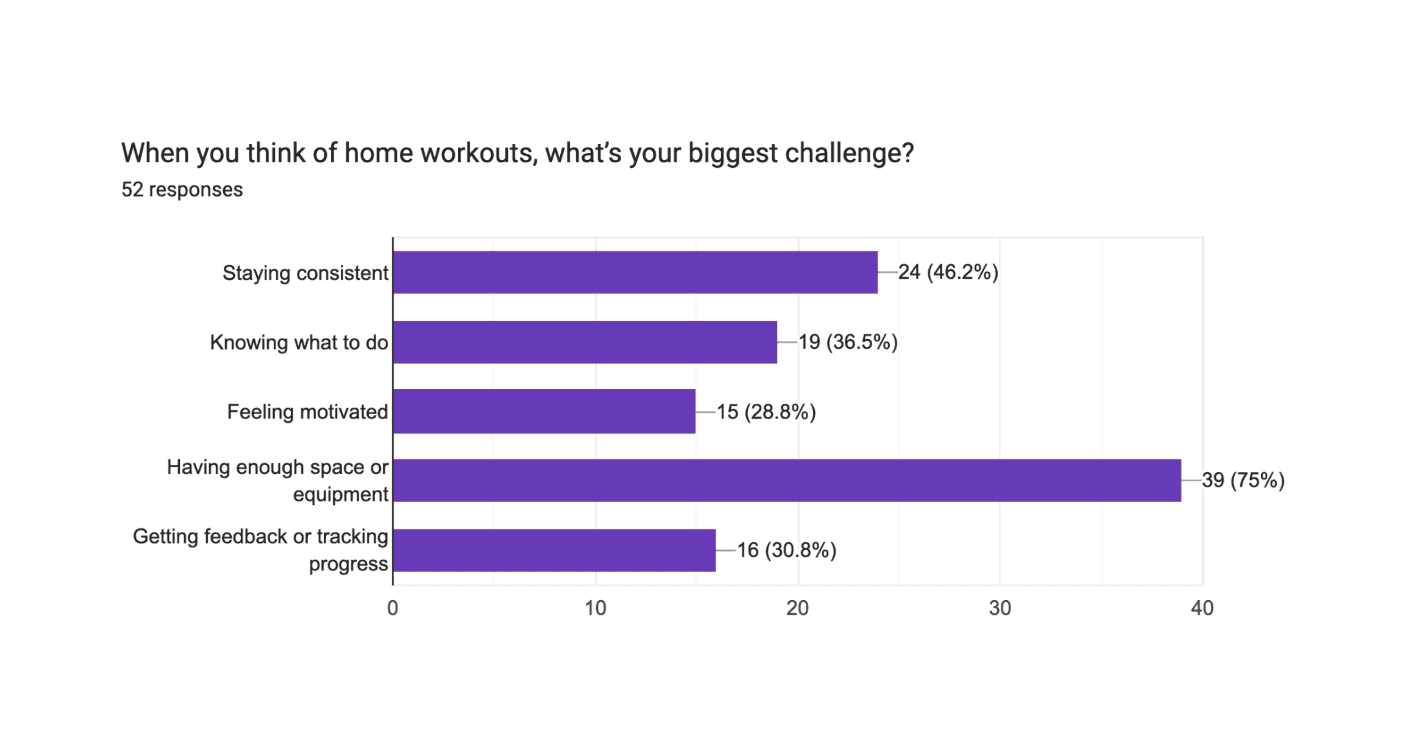
75% Agree having enough space or the appropriate work out equipment is a huge challenge to working out at home.
For 46.2% it’s challenging to stay consistent with no one giving them feedback or tracking their progress.
Others lack motivation and know-how.
Trainers (25 responses)
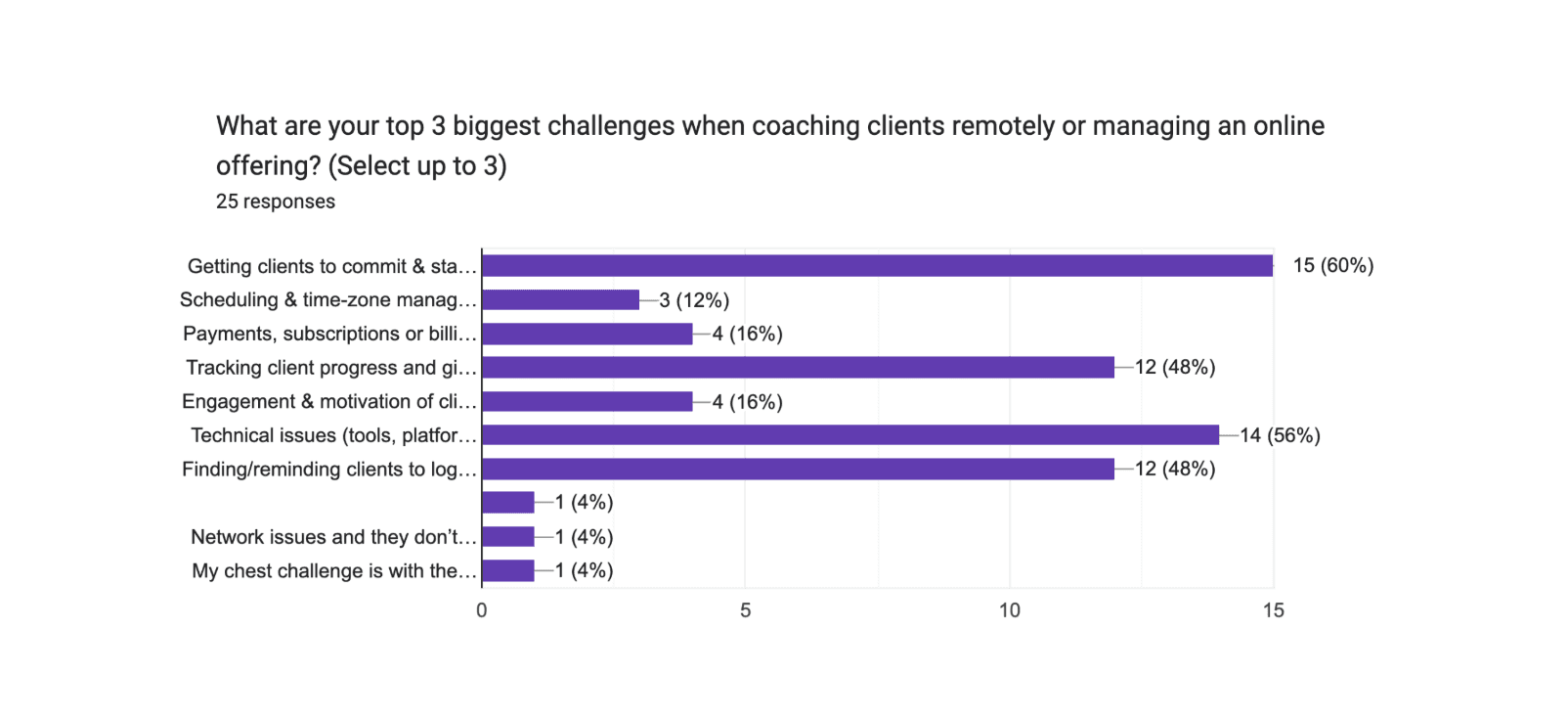
60% Find it challenging getting clients to stay committed and consistent.
56% Say technical/connectivity issues.
48% Find it challenging adequately tracking clients progress and giving adequate feedback.
For 48% it’s reminding clients to log data.
User Personas.
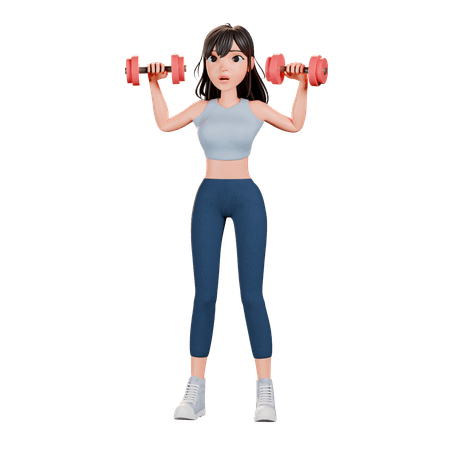
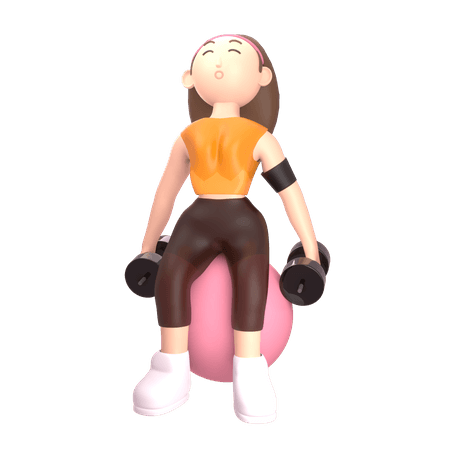
Joan
Might have prior gym experience but lost consistency due to time constraints and social discomfort in public fitness settings.
Goals
Find flexible, at-home workout options that fit unpredictable schedules.
Gain confidence in physical ability without the pressure of the gym.
Frustration
Struggles to stay consistent without structured feedback.
Unsure how to start or if postures are done accurately.

Dave
Have not used a fitness app before but would prefer evenings or early mornings to exercise, often at the gym or a mix of home and gym environments.
Goals
Gain motivation to stay consistent.
Integrate sustainability into existing tools and apps.
Contribute to solutions that make collective impact visible.
Frustrations
Limited space and lack of appropriate equipment
Difficulty staying consistent
Betty (Fitness Trainer)
Values structured systems that simplify client management and reduce fragmentation across tools.
Goals
Streamline remote coaching tools into one unified platform..
Increase client engagement and consistency.
Frustrations
Difficulty tracking progress without client input.
Connectivity issues, particularly in regions with poor internet.
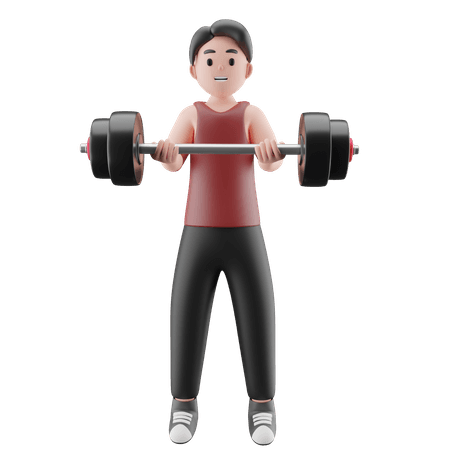
Jude (Fitness Trainer)
Delivers coaching via WhatsApp/Zoom, wants to scale without burning out.
Goals
Deliver personalized remote coaching experiences.
Maintain smooth online sessions without technical disruptions.
Frustrations
Inability to correct clients' posture in real time.
Complex admin, payment or billing setups.
Insights and Light Journey Overview.
People want to exercise.. but they don't feel confident doing it alone…
Across answers, a clear picture emerged:
Challenge | Opportunity |
|---|---|
| Create a system that reduces the emotional friction of working out not just by giving workouts, but by giving reassurance, safety, and micro-feedback. |
Motivation is the weakest link
Challenge | Opportunity |
|---|---|
This was the biggest theme in the dataset. People said:
People do want someone to “check in” on them and to track progress consistently. Some don’t want crowded spaces, but want enough space to be able to comfortably get their routines right confidently. | Create a motivation engine with reminders, check-ins, streaks, gentle accountability that doesn’t feel robotic or generic. A supportive, guided, friendly “in-your-pocket coach” that helps home workouts feel structured, varied, and validated. |
People don't feel confident or properly equipped
Many said they not only feel unsure about what to do,but also what to use.
Challenge | Opportunity |
|---|---|
| Provide equipment guidance,simple explanations, beginner variations, low-equipment alternatives, and confidence-building instructions for machines. Create workout paths that adapt to no equipment, minimal equipments and offer guidance on “how to use what you already have.” at home. |
Recommendations & Next Steps.
Users don’t want extreme routines. They want direction, simplicity, and someone to guide them gently. This is what the MVP should solve.
Based on the insights from our insghts from our research, we recommended these next steps:
Core MVP Features to be Validated next
Simple beginner workout paths (with or without equipment)
Step-by-step equipment explanations
Clear exercise alternatives for users with no equipment
A very simple progress tracker (non-intimidating)
Validate the trainer experience separately (based on trainer survey)
Before building for trainers, validate their needs. Trainer data showed interest in easier remote guidance, sending routines quickly, tracking client progress without heavy tools, flexible communication and easier admin integration.
Next Steps
Map trainer workflow pain points
Prototype a lightweight client-management interface
Test how trainers want to send routines (video? templates?)
Convert insights into actual product flows (UX wireframes)
The survey data should now guide:
Onboarding questions
The workout selector
Progress tracking screens
Trainer–client messaging flow
Rquipment-free mode
This is where insight → becomes → design decisions.
Output:
Low-fidelity wireframes reflecting real user needs.
3. Build and test an early prototype (Figma click-through or "Vibe Coded")
Before coding anything, create a basic interactive prototype.
Validate whether the flows are simple
Test if shy/busy users feel comfortable with the interface
Test if trainers understand how to manage clients
Output:
Usability test-ready prototype.
4. Run super lightweight usability tests (5–8 users)
This is watching people click through a prototype. The Focus is on:
Can they find workouts easily?
Do they understand where to check progress?
Is communication with the trainer straightforward?
Does the design feel “easy,” “non-overwhelming,” and “inclusive”?
This can be done remotely in 3–4 days.
Output:
Usability issues list with severity ratings.
5. Refine and update the prototype
Fix the biggest friction points:
too many steps
confusing buttons
unclear labels
overwhelming screens
You are now polishing the MVP experience.
Align development team + create a simple build plan
The engineering team should now:
map out what will be built in sprint 1, 2, 3
identify API needs
estimate timeline realistically
agree on must-haves vs. can-wait features
Output:
A technical roadmap for the MVP.
7. Prepare the “pre-launch” audience (soft marketing + trainer outreach)
Because trainers are a supply-side market, client recruitment should start early.
Actions:
collect emails of interested trainers
create a simple landing page
push signups via Instagram / TikTok
connect with fitness micro-influencers
start building a waiting list of users
Output:
Early user segments ready for beta.
Launch a small closed beta (15–20 people)
Test with:
8–10 users
5–8 trainers
Observe:
Which features people ignore?
What confuses or annoys them?
Output:
Beta feedback report.
9. Refine + prepare for public launch
Improve:
bugs
copy
onboarding clarity
notifications cadence
workout experience
Then plan a simple go-to-market strategy.
Our Final Thoughts.
With the survey complete and user needs clearly mapped, a possible path forward would be to turn these insights into a focused MVP, test it quickly with real users, and refine based on what truly matters to them. This approach could help ensure the solution feels supportive, simple, and genuinely useful—especially for the shy, busy, and beginner-friendly audience the product is meant to serve.

